
Orion Farr
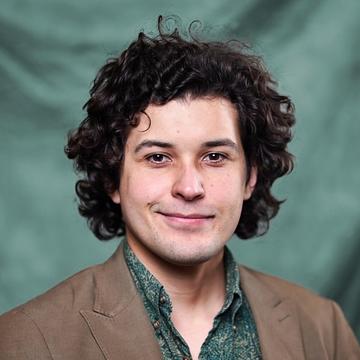
Dr Orion Farr
Senior Research Fellow, Oxford EARTH
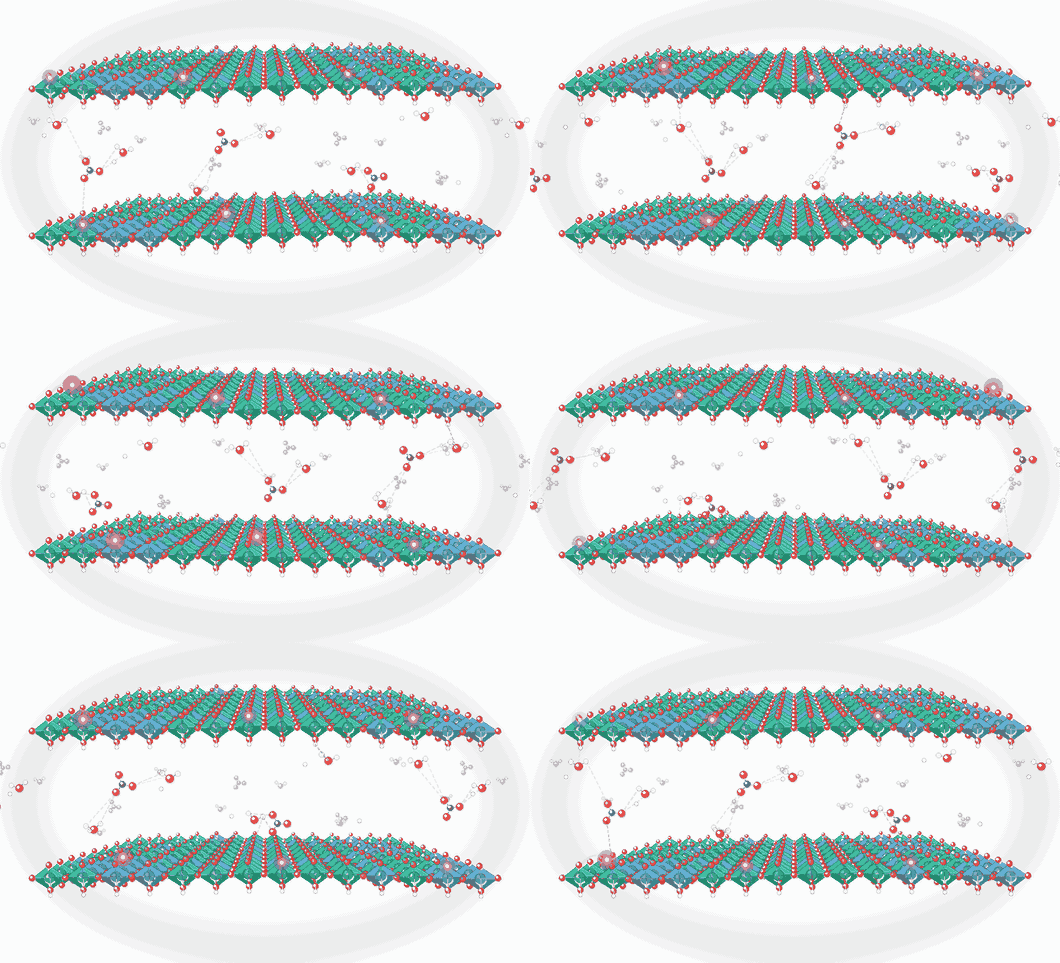
How are electron and proton transfer coupled in reactive materials? I study how redox-active materials organize and transfer charge at hydrated interfaces, with a particular interest in chemistry within nanoconfined spaces, where ion gradients, proton transport, and local solvation can produce unique behaviors very different from that of bulk solution.
My principal model system is green rust, a mixed-valence Fe2+/ Fe3+ layered mineral whose hydrated interlayers couple electronic, protonic, and ionic transport to achieve the redox transformations of CO2/CO/CH4 gasses and various organic and inorganic species. I couple electrochemical and spectroscopic methods to investigate proton-coupled electron transfer, carbon transformation, electrochemical memory, and how layered materials store and redistribute charge.
More broadly, I explore how these principles operate across redox-active and layered materials from the geochemical processes that may have preceded metabolism to modern applications in sustainable catalysis (CO2 reduction/H2 generation), electrochemical energy storage, memristive materials, selective critical-resource recovery, and environmental remediation.