
A new catalytic fluorination paradigm based on calcium
A team of University of Oxford researchers has developed a new catalytic approach to forming carbon–fluorine bonds. The study, published this week in Nature, is part of an ongoing collaboration between the Aldridge and Gouverneur research groups.
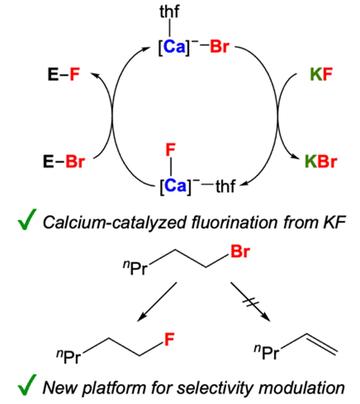
By designing molecular complexes of calcium – the fifth most abundant element in the Earth's crust – OxICFM doctoral student Job Struijs and staff scientist Aggy Crumpton have demonstrated a new way of catalytically shuttling fluoride to organic molecules. Their new method opens up opportunities to control the reactivity and selectivity of fluorination reactions.
First author Job Struijs (pictured) explains:
“Calcium fluoride is best known as the mineral fluorspar, a highly stable and insoluble material. This stability also presents a fundamental challenge in molecular calcium-fluoride chemistry, where the strong calcium-fluoride interactions can hinder fluoride transfer.

“Through careful design of the ligands surrounding calcium, we were able to overcome this limitation and develop complexes capable of catalytic fluoride delivery. Importantly, the calcium centre not only facilitates fluoride transfer but also modulates its reactivity, offering new possibilities for controlling selectivity in fluorination reactions.
“More broadly, this work demonstrates the potential of abundant redox-inflexible metals as platforms for developing new catalytic methodologies.”
Prof Simon Aldridge comments:
“One of the more difficult scientific challenges we’re trying to address is the development of entirely new catalytic platforms, particularly those based around abundant, non-redox active metals like calcium. Understanding the fundamentals of the bond-making and -breaking steps at the metal proved to be critical in developing a system capable of catalytic turnover. In coming up with a solution, the opportunities for collaborative work here in Oxford – across the breadth of synthetic chemistry – proved critical.”
The study, Calcium catalysed nucleophilic fluorination, is published this week as an accelerated article in Nature.